Getting Traffic but No Leads? Here Are the 10 Reasons Most Businesses Never Think to Check
Traffic is good because you see your figures rise and your chart shows promising results. And then y...
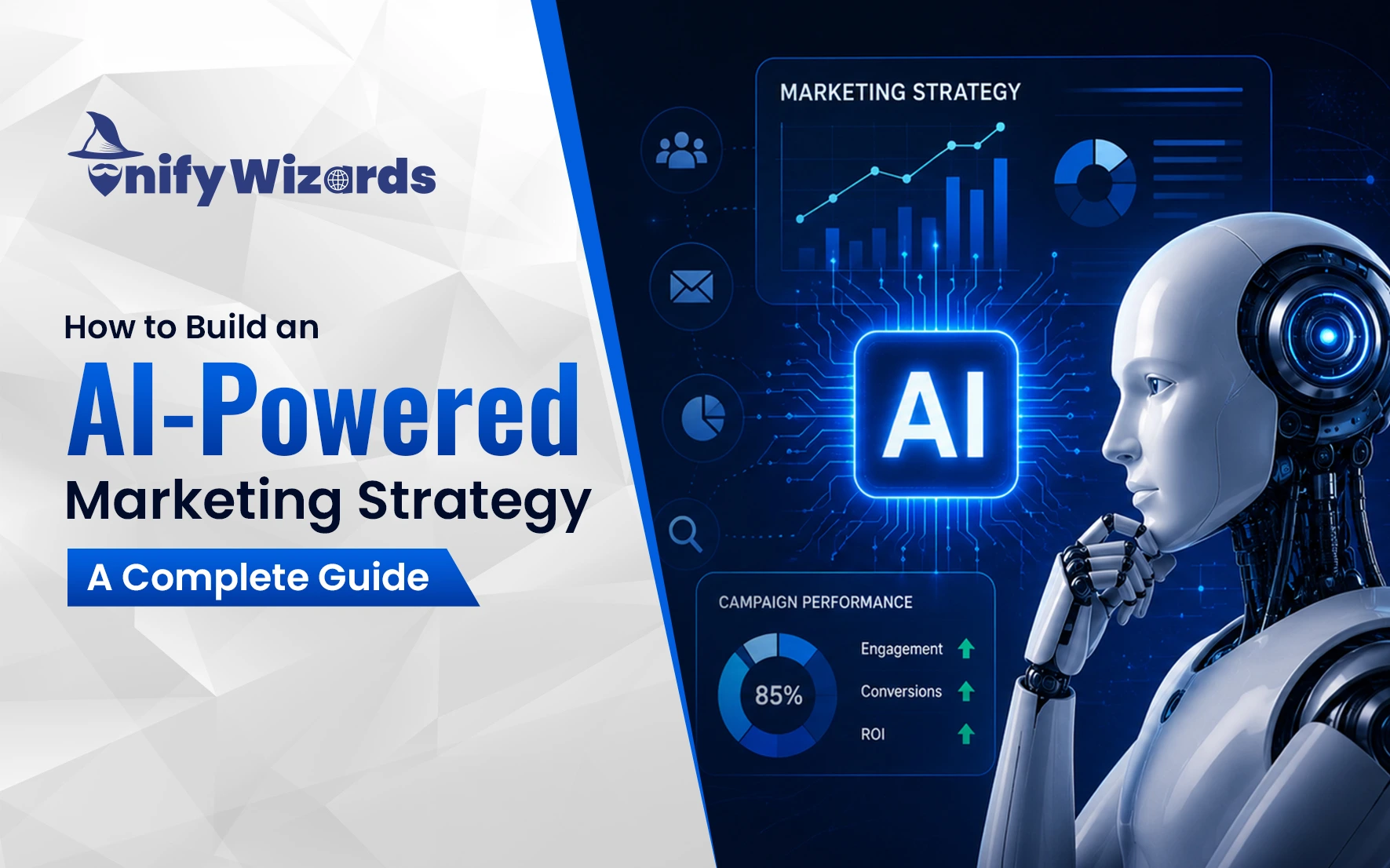
An abrupt revolution is going on in Digital marketing in 2026. The firms with outdated strategies found themselves overtaken by competitors who had a completely different approach in marketing. Particularly one which was based exclusively on AI marketing.
Marketing strategies where an AI layer is added on top of the traditional thinking still lag behind because the mindset remained ancient, nonetheless. Marketing approaches where digital marketing involves AI, purely in data analysis, content creation, targeting, and optimizing, are considered compounded and not accumulated.
As stated in the state of AI in marketing report from 2026 made by Jasper, 94% of marketing teams use AI technologies at present time. Nevertheless, only 41% of these teams are able to show results that would prove its efficiency. This is not the problem related to technology but strategy.
This guide will solve your problem.
The definition of an AI marketing strategy can be described as the strategy that employs artificial intelligence to make decisions, automate processes, personalize experiences and evaluate performance in place of manual marketing processes that limit marketing departments from achieving their goals.
An AI marketing strategy is not the same as an AI marketing tools list. The tool is the component and the strategy is the relation among components. It involves making decisions based on certain data, automating some processes, and those that will need human interaction and measuring the whole process against business results.
AI marketing is superior to the conventional form due to its unmatched speed, scalability and precision, enabling it to analyse customer behavior and tweak campaigns in real-time, rather than having to wait for the next week's review meeting to figure things that have been known by the data all along. The numbers speak for themselves. Businesses that actively implement AI-based strategies are experiencing a growth rate much higher as compared to businesses who are still using traditional methods.
In content marketing, AI-powered optimization can generate three times the number of leads generated by the conventional form of advertising at 62% less cost. The tasks that would normally take hours to do for a human being like keyword research, market segmentation, A/B testing, bid adjustment; take just minutes for the AI.
Main components of an AI-powered marketing strategy include data infrastructure, personalization, content intelligence, prediction, and campaign automation; and all of these components interrelate and depend on each other in order to create a system that becomes progressively more intelligent as time passes.
Below are the functions of each of these components:
| Component | What It Does | Why It Matters |
| Data infrastructure | Collects all customer data from every point of contact in one accessible source | Decisions based on fragmented data yield for fragmented outcomes |
| Personalization at scale | Provides personalised content and offers to individual users according to their behaviour | Personalised experiences always beat generic experiences in all channels |
| Content intelligence | Uses artificial intelligence to find out what to create, when to publish, and how to optimise | Eliminates guessing that leads to inconsistency in most content strategies |
| Predictive analytics | Finds which leads have the highest chances of converting even before running the campaign | Redirects budget towards the audiences that will bring in revenue |
| Campaign automation | Carries out multiple workflows such as email series, ad updates, and follow-ups automatically | Saves time and minimises human errors at the same time |
Rather than treating AI as yet another employee layer, the organizations who redesign their marketing operations around AI capabilities benefit the most!
A 2026 digital marketing company operating with the assistance of AI would be significantly more advanced compared to its competitors who are still using manual workflows not only because of the difference in speed but also because of the kind of insights that could be produced and used.
It is the analytical and operational power that is performed by the AI. After all, there is no point in having people perform routine tasks. However, what is left for people to do? Humans do the strategic and creative decisions that allow them to determine whether the analysis asks the correct question in the first place. Digital marketing companies can run through their campaigns faster while also having the kind of targeting of their audiences via segmentation that was impossible before as well as the reports that connect marketing actions to sales instead of traffic and impressions that look good during an evening TV presentation but are essentially meaningless in front of the board.
At Unify Wizards we develop marketing strategies using AI and create marketing solutions that businesses need to grow.
If your marketing strategy is outdated, contact us now!
Traffic is good because you see your figures rise and your chart shows promising results. And then y...
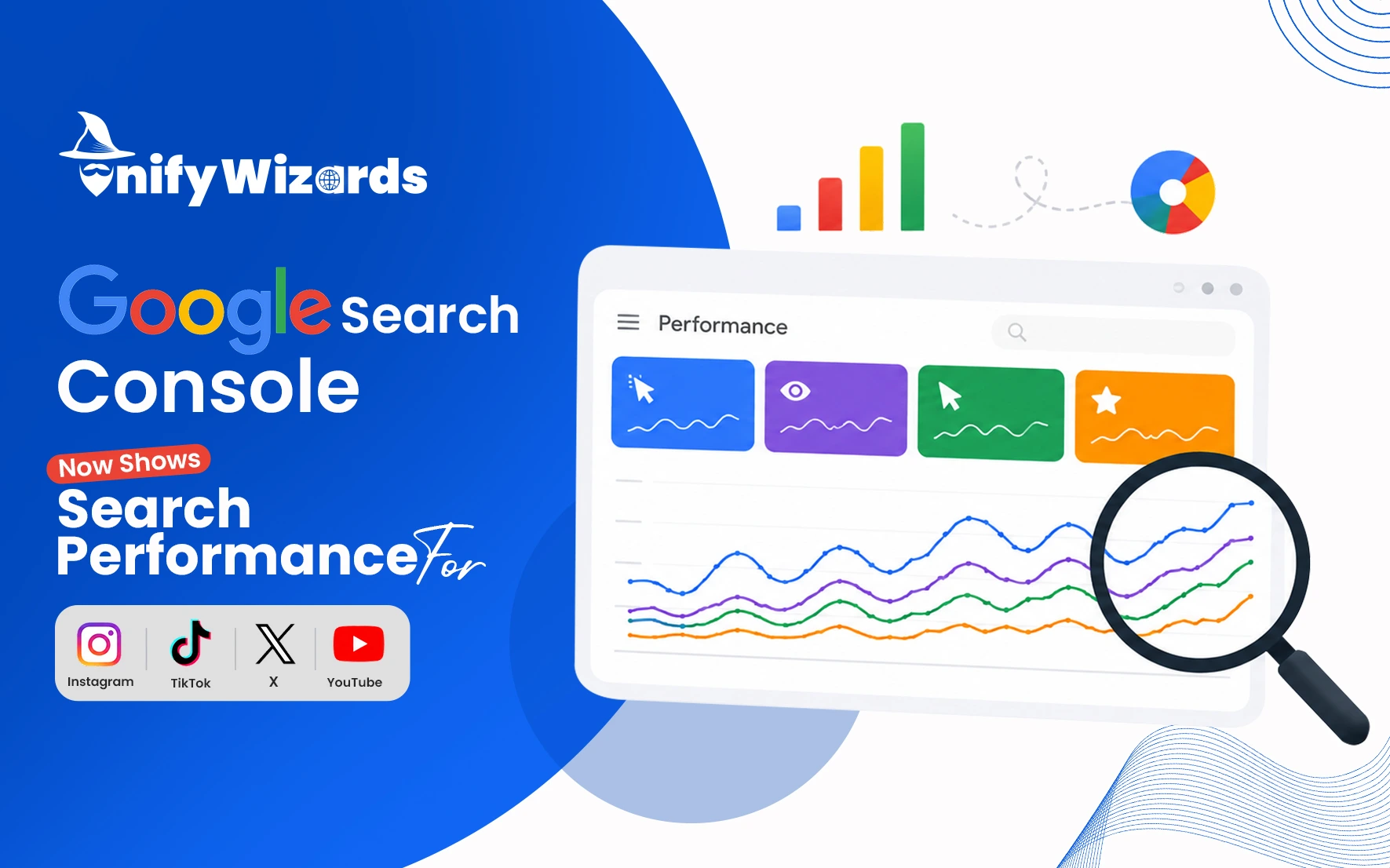
There is something very annoying which has been going on for years. You would have been showing up i...

Over the past decade, life has been more about performance than presence. The pressure to perform is...
It has been proven by several brands that customers respond better to display advertising. Wi...