How User Research Fuels Business Growth
User research has various benefits when it comes to the product development process. In simpler term...
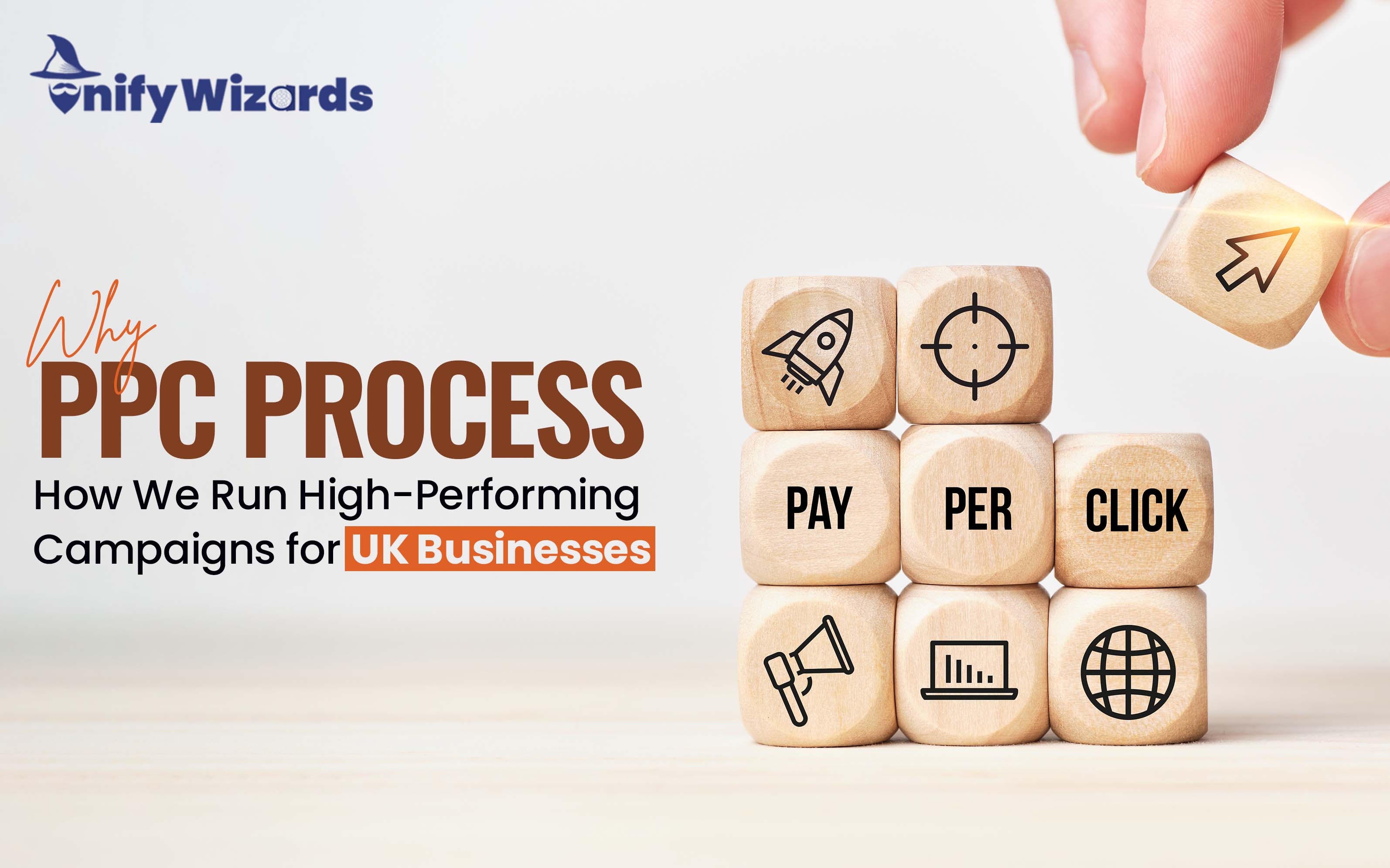
Paid ads in the UK don’t fail loudly. They fail quietly. Spend keeps going out. Clicks come in. Reports look fine at a glance. But when someone finally asks, “Is this actually helping the business?” The answer feels unclear.
That’s usually the point where Unify Wizards enters the conversation. As a PPC Agency UK businesses trust with long-term growth, we’ve learned that PPC works best when it’s treated like an operational process, not a series of experiments.
Structure matters. Restraint matters. And paying attention matters more than clever tactics. In a competitive UK market, that difference shows up fast.
First things first: Understanding the business!
Before ads, before platforms, before budgets, there’s context.
We start with conversations, not dashboards.
What we want to understand early on:
These answers shape everything that follows. Without them, even the most refined PPC process ends up chasing the wrong result.
Keyword research that reflects intent, not just volume!
Keyword tools are helpful. They are not honest on their own.
We use platforms like Google Keyword Planner, SEMrush, and Ahrefs, but we don’t stop there. We read searches the way people would say them out loud. We ask whether a phrase sounds curious or decisive.
For UK audiences especially, wording matters more than most realise.
Our keyword research focuses on:
This is where many PPC services UK campaigns quietly win or lose.
A strategy shouldn’t feel complicated. It should feel intentional.
We choose platforms based on behaviour, not trends. Google Ads almost always leads. Bing Ads often plays a supporting role. Meta Ads come into play when timing and audience alignment make sense.
Instead of chasing every option, we ask:
This funnel-led thinking is central to effective PPC strategy for UK businesses. Each campaign has a job. If it doesn’t, it doesn’t belong.
People don’t hate advertising. They hate being talked at.
Our ad copy avoids over-selling and focuses on clarity. What problem does this solve? Why now? What happens next?
We test variations constantly, but we don’t script creators or force brand voice. When ads feel rehearsed, users sense it instantly.
And don’t worry, landing pages get the same treatment.
We look closely at:
Strong ads can’t rescue weak pages. They have to work together.
Setup is unglamorous work. But setup is the
We plan campaigns carefully, segment carefully, and test tracking functionality before anything goes live. Conversion tracking with the use of GA4 and Google Tag Manager is not optional.
Ad extensions are used because they serve a purpose and are not mere decoration.
This level of care is what reliable Google Ads management London businesses need when competition is tight.
We don’t expect perfection at launch.
There’s always a learning phase. We let data settle before reacting, then start refining based on patterns, not daily swings.
Ongoing optimisation includes:
This is PPC campaign optimization as it actually happens. Calm, consistent, and ongoing.
Reports shouldn’t exist to reassure. They should explain.
Our reporting focuses on what matters:
We care about outcomes because that’s what keeps ROI-driven PPC grounded in reality.
UK markets are competitive, fast-moving, and expensive. We understand the pressure that comes with that.
Clients work with dedicated account managers who know their campaigns personally. Communication stays clear. Strategy stays flexible. Decisions are explained, not hidden behind jargon.
That’s why high-performing PPC campaigns stay stable over time.
PPC isn’t unpredictable.
It’s often just under-structured.
A thoughtful process eliminates guesswork and waste as well as turns advertising costs into something that businesses can depend upon.
If you are searching for a digital marketing firm UK that views PPC as a system instead of a game of chance, Unify Wizards is here to assist you.
Let’s make a PPC system that doesn’t depend on luck, contact us today!

User research has various benefits when it comes to the product development process. In simpler term...
The use of the Internet by many people has a lot of benefits for businesses and makes it easy for br...

Have you ever noticed some websites get more visitors while many others don’t? The answer is simple...
Are you an entrepreneur trying to convert your clicks into paying customers? We've got a marketing s...